
School Building Trends in Finland: Balancing Tranquility and Flexibility
In Finland the design of teaching facilities in schools is increasingly focused on creating tranquil environments. The goal is to ensure that pupils are not confined to one large space throughout the day. One of the biggest challenges with open spaces is noise. To address this, many new schools are being built with flexible learning facilities that can be adapted to different teaching situations. How are those modern school buildings today?
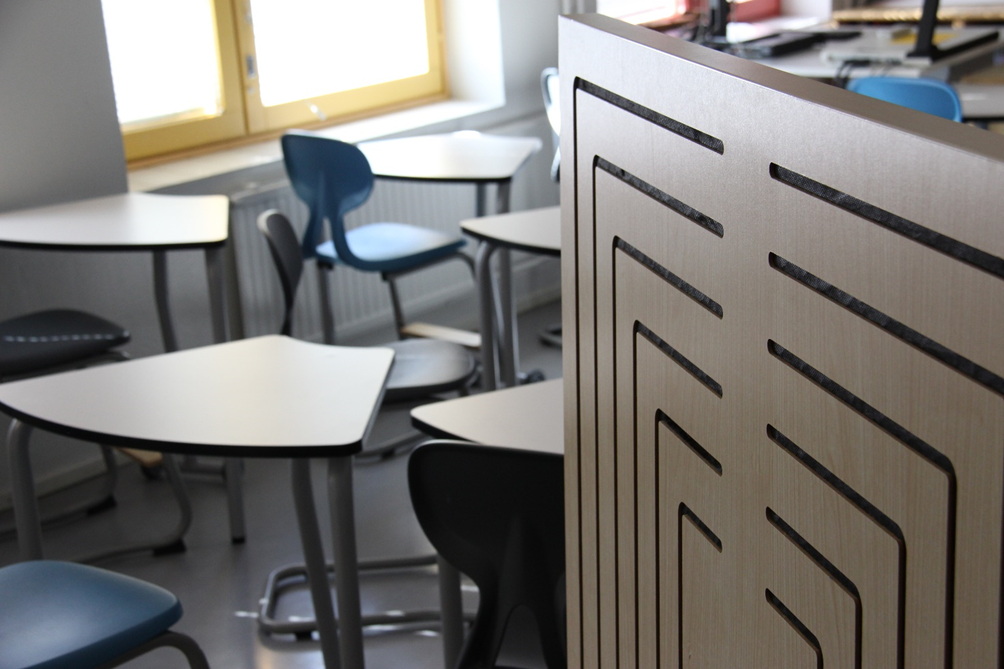
In Kuopio, for example, the city has implemented a policy to construct flexible spaces in new schools. These large areas can be divided into smaller spaces as needed, providing a quieter and more focused learning environment.
Despite the trend towards flexible spaces, traditional corridor schools are still being built in Finland. In Turku, new schools feature traditional classroom divisions with double doors between classrooms that can be opened when necessary. In Pori, new school buildings have adopted a cell-based design, where two grades share one cell. For instance, 1st and 2nd grade pupils are in the same cell, with a central market area surrounded by teaching facilities. The walls between these spaces can be partially opened to create a more dynamic learning environment.
Looking ahead, the construction of schools will need to consider climate, environmental, and sustainable development goals, as well as psychosocial and physical safety, and the prevention of bullying. To enhance supervision, many schools are also in corporating glass walls into their designs.
Interested in seeing Finnish schools, school buildings and their learning environments up close? Study Tours by Learning Scoop make it possible!
Which school design approach do you find most appealing—open, flexible spaces or traditional classrooms? What are the pros and cons of each?
Written by Katja Mäkelä