
Outdoor Recess and Unstructured Play in Finnish Primary Schools
In Finland, students typically enjoy a 15-minute recess after every 45-minute lesson. This means they receive multiple breaks throughout the day, not just one long lunch break. Many primary schools also include a longer recess or lunch period (30–60 minutes) to allow time for eating and play. Research shows that regular recess breaks improve students’ attention and academic performance. These breaks help reset the brain, making it easier to absorb and retain new information. Fresh air and outdoor recess take it to another level!
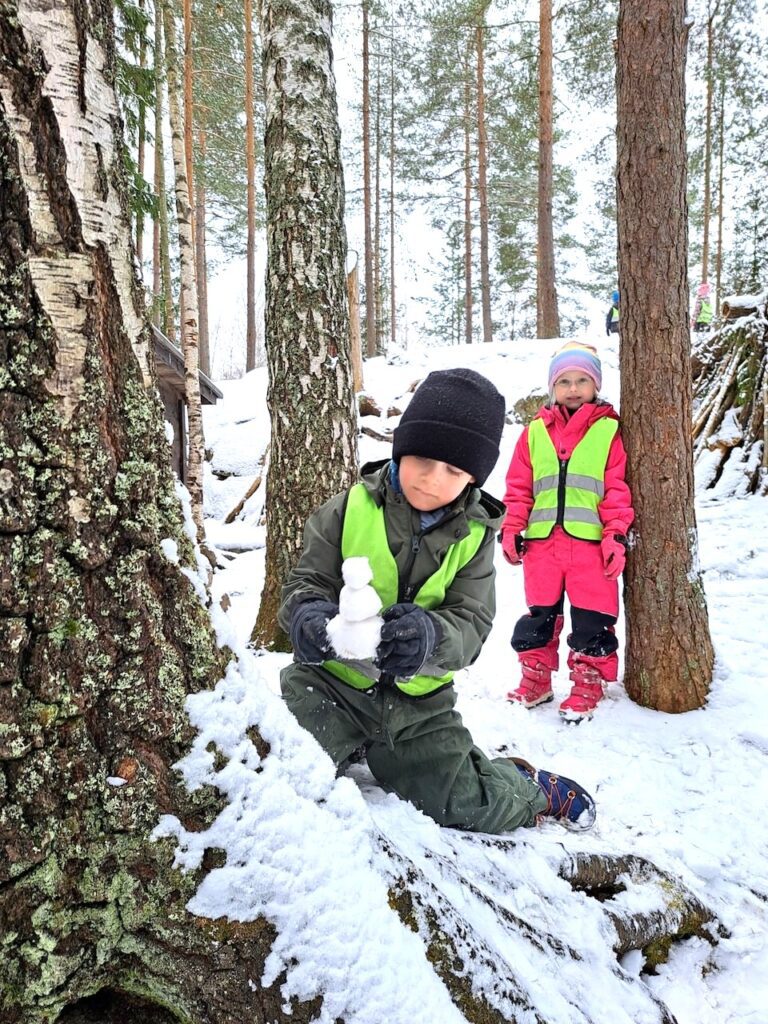
Recess in Finland is almost always spent outdoors, regardless of the weather. Students are encouraged to go outside even in rain or snow. In winter, schoolyards transform into snowy playgrounds where children sled, build snowmen, and play snow games. Cold weather is no excuse to stay indoors, recess continues year-round. Outdoor play supports healthy physical development by giving children the chance to move, run, and explore. Most recess time is unstructured, allowing students to choose how they want to spend it whether playing games, chatting with friends, or simply relaxing. Outdoor recess makes it possible.
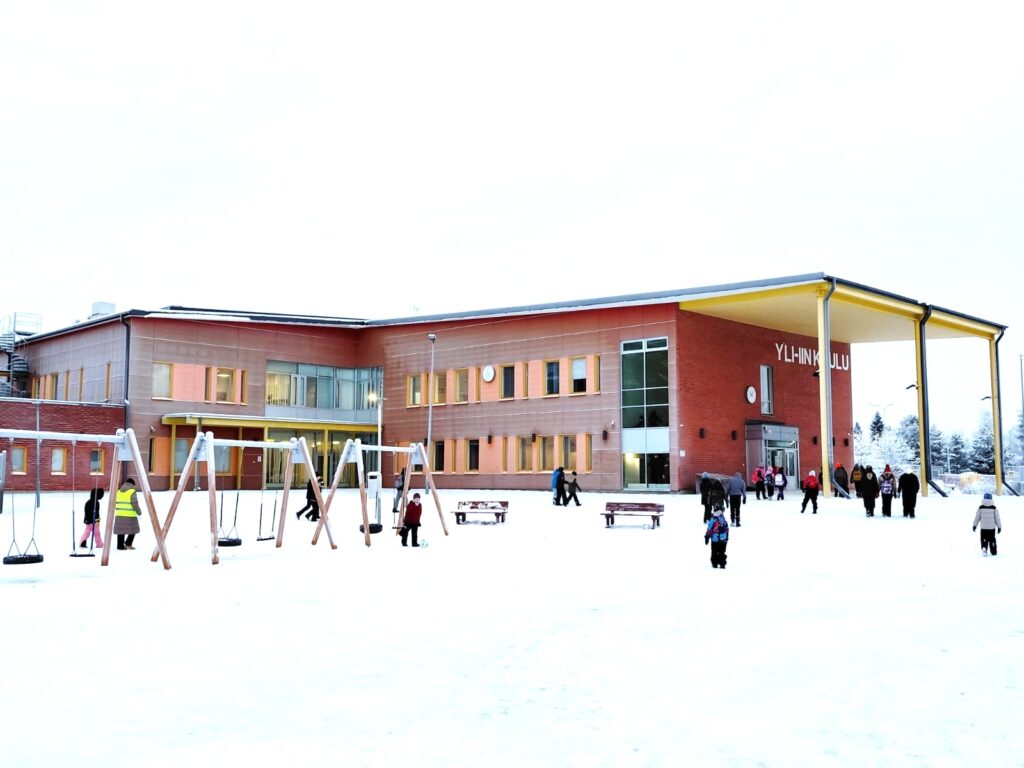
For example, an article in the Finnish newspaper Helsingin Sanomat highlights a group of fifth-grade girls at the school in Tampere, Finland, who have been building huts in the schoolyard. This creative activity is inspired by a fictional narrative about hikers from 70 years ago and their descendants. According to the students, spending recess in their self-constructed “guesthouse” not only enhances their concentration in class but also provides a rare opportunity for imaginative play – something that becomes less common at their age.
These girls embrace play as a meaningful part of their school day. They enjoy being outdoors, using their imagination, and spending time with friends in nature. Their enthusiasm has even sparked a small trend: younger students have started building huts on the other side of the yard, inspired by the older girls’ creativity.
Free play during recess fosters creativity and imaginative thinking, skills that are essential for problem-solving and innovation. It also plays a vital role in both social-emotional and cognitive development. Through play, children enhance memory, attention, and abstract thinking. Group activities teach cooperation, turn-taking, and conflict resolution, while role-playing games help build empathy and understanding.
For the fifth-grade girls at school in Tampere, hut-building is more than just a game. It’s a way to connect with each other, express creativity, and enjoy the outdoors – reminding us all of the lasting value of play.
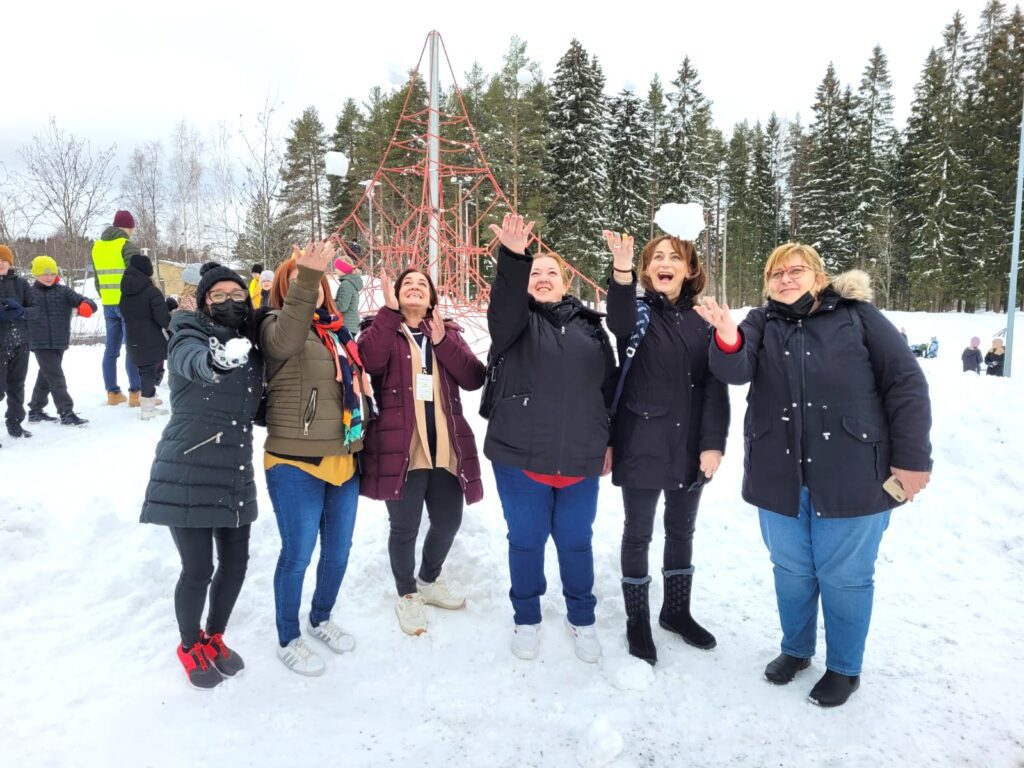
Interested in seeing Finnish schools in action – join our Study Tours!
Have you seen similar student-led play initiatives in your school or community? How about outdoor recess? Do you think schools should offer more time for free play? We would love to hear your thoughts!
Written by
Katja Mäkelä
Sources:
Burriss, K. G., & Tsao, L. L. (2002). Review of Research: How Much Do We Know about the Importance of Play in Child Development? Childhood Education, 78(4), 230–233. https://doi-org.libproxy.tuni.fi/10.1080/00094056.2002.10522188
Huisman, S. (2014). Focus on Family: The Importance of Play: Susan Catapano, Editor. Childhood Education, 90(6), 466–467. https://doi-org.libproxy.tuni.fi/10.1080/00094056.2014.983029
Lehtokari, R. (15.5.2025). Viidesluokkalaiset puhuvat leikin puolesta. Helsingin sanomat. https://www.hs.fi/suomi/art-2000011207712.html
Murray, R. & al. (2013). The Crucial Role of Recess in School. Pediatrics (Evanston), 131(1), 183–188. https://doi.org/10.1542/peds.2012-2993
Ramani, G.B. (2012). Influence of a Playful, Child-Directed Context on Preschool Children’s Peer Cooperation. Merrill-Palmer Quarterly 58(2), 159-190. https://dx.doi.org/10.1353/mpq.2012.0011