
From inspiration to classroom practice: Learning Scoop at FinFest in Istanbul
Hosted at Bahçeşehir University, FinFest brought together people with different interests in Finnish education at FinFest in Istanbul on 7–8 November 2026. Families explored study opportunities in Finland, including general upper secondary education, vocational education and universities of applied sciences. Teachers sought fresh ideas for their classrooms, while principals and school leaders explored perspectives on developing their schools.
For Learning Scoop, the focus was on connecting educational thinking with practical tools teachers can use in their everyday work. How can teachers help students become more active agents in their own learning? This question was at the heart of the two workshops led by Learning Scoop’s Johanna Järvinen-Taubert.
Activating your students: why, what and how?
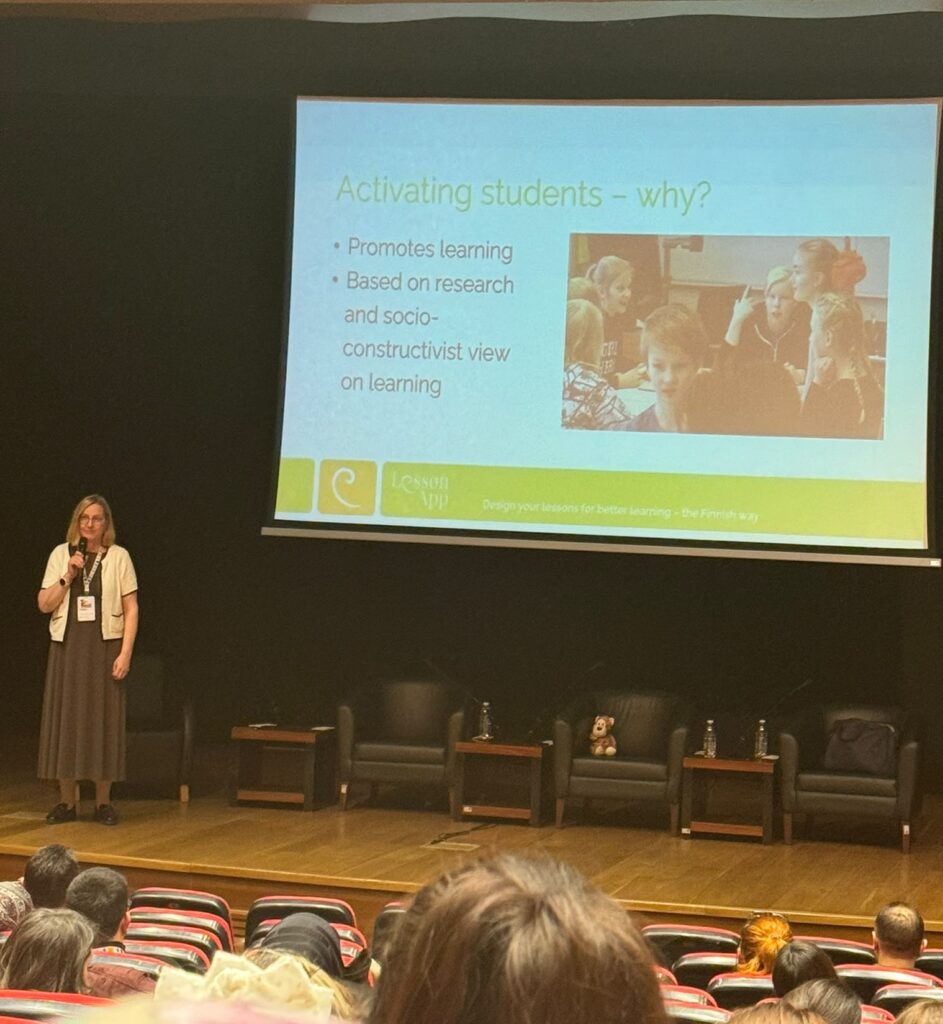
Johanna’s two workshops, Activating Your Students, explored both the reasoning behind active learning and ways to put it into practice.
The starting point was the socio-constructivist view of learning: learners actively build understanding by connecting new ideas with what they already know and through interaction with others. Teaching can support this process by giving students opportunities to think, discuss, question and make sense of what they are learning.
But what does activating students actually mean? Does it involve the mind, the body, or both?
The workshops explored the importance of varied teaching methods and learning environments. Physical movement can support learning, while activities that invite students to explain their thinking, compare ideas or reflect can make them mentally active. The key is to choose methods that serve the learning objectives.
Experiencing the methods as learners
The practical focus extended across the whole workshop: how can students be actively involved at orientation, acquiring new knowledge, applying new knowledge, and reflection?
Participants had opportunities to try activating methods themselves. Experiencing an activity from the learner’s perspective gives teachers another way to consider how it works, and how it could be adapted for their own students.
The workshops connected the “why” of pedagogy with the “how” of everyday lesson planning.
Johanna also introduced LessonApp, our digital tool for planning better lessons. With a clear pedagogical lesson structure and more than 150 activating teaching methods, LessonApp helps teachers turn their ideas into purposeful learning experiences. It is now available in Turkish, too.
Finnish education in Turkish: continuing the learning beyond FinFest
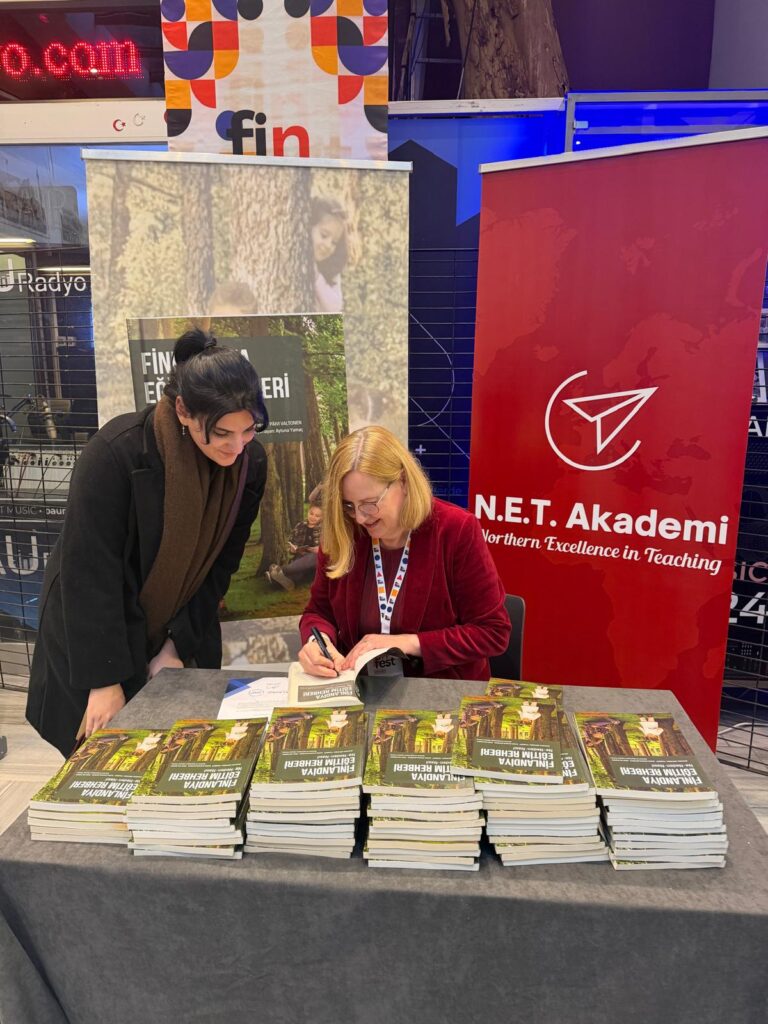
Workshop participants also received the Turkish edition of our book, Finnish Education in Practice: What, Why and How, translated by our partner Aytuna Yamaç.
The book follows the same practical approach as the workshops: exploring what happens in Finnish education, why particular approaches are used and how they work in everyday educational settings.
As one of the book’s editors and contributing authors, Johanna met readers at the stand, talked about the book, signed copies and posed for photographs with visitors. These encounters offered another opportunity to connect around a shared interest in teaching and learning.
The Turkish edition, Finlandiya Eğitim Rehberi: Ne, Neden, Nasıl, makes these perspectives accessible to more Turkish-speaking educators and families.
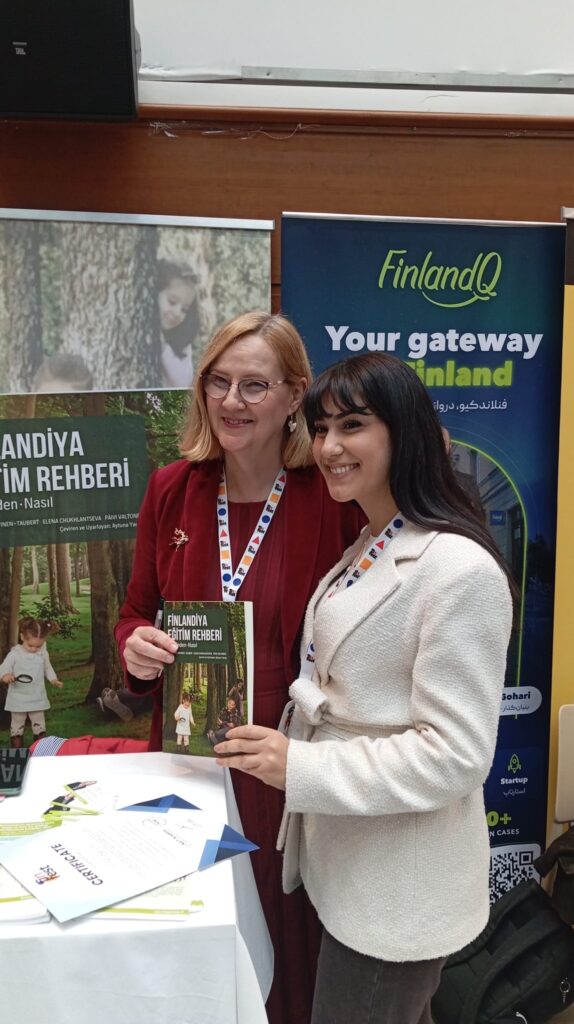
Thank you to our partner N.E.T. Akademi, Aytuna Yamaç, the FinFest team and everyone who joined Johanna’su workshops or stopped by to meet her. It was a pleasure to share ideas for and explore ways to make learning more active, purposeful and engaging. Special thanks to Johanna’s amazing Turkish assistant Marjona Matyazova for all the help and support during the event!
Thank you!!
Thank you for all your help and assistance, you made it smooth!