
Finnish Professor Calls for Smarter Use of AI in Education
In education, completing assignments and writing texts are part of everyday life. They also play an important role in developing what are often referred to as basic skills. As artificial intelligence becomes increasingly common in education, many of these tasks might become easier for students. But what happens to learning when we outsource some of our thinking to AI? Could we learn to use AI in a way that strengthens the learning process rather than making students passive?
Finnish professor Sanna Järvelä studies learning and the use of artificial intelligence in education. In her view, instead of framing AI as either good or bad for education, we should focus on how it can help people understand and learn rather than doing the thinking for them. She talks about hybrid learning, which combines traditional learning with AI in ways that can strengthen the learning process.
Instead of framing AI as either good or bad for education, we should focus on how it can help people understand and learn rather than doing the thinking for them.
For example, AI-powered simulations can be used to create learning situations that develop problem-solving and practical skills. However, Järvelä emphasizes that simulations can never replace real-life situations, where mistakes and the consequences of our choices are an essential part of learning. For this reason, real-world interaction and hands-on experimentation remain important parts of learning whenever such opportunities are available.
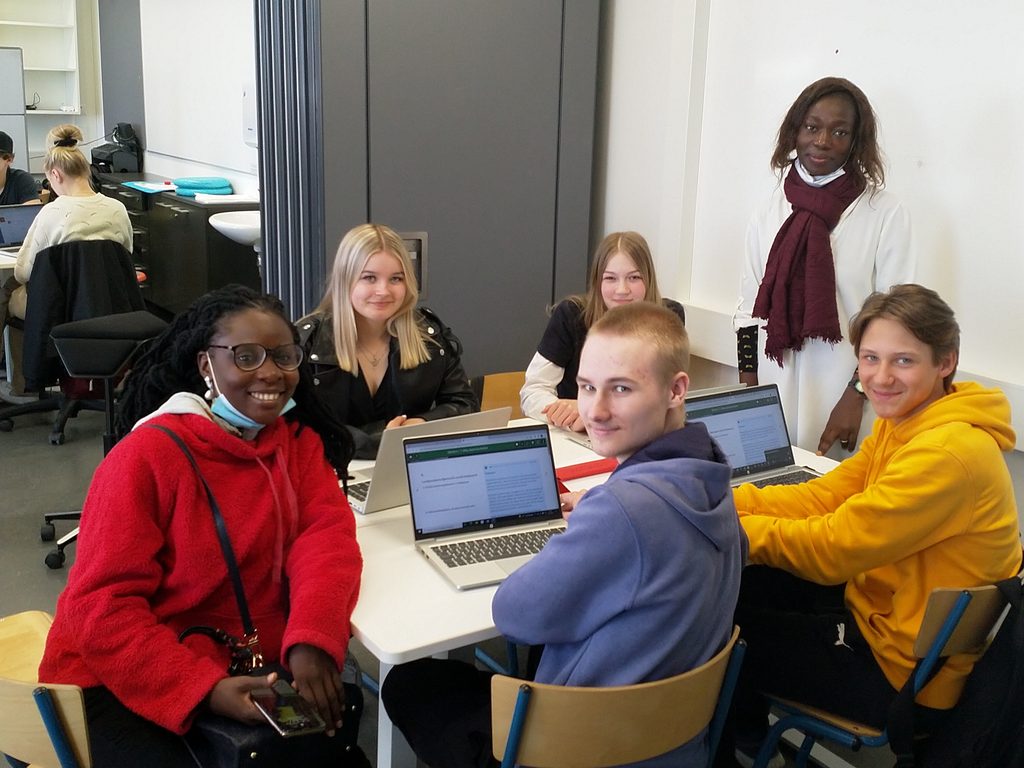
According to Järvelä, AI could also be used more extensively to identify students’ strengths and weaknesses. This would allow students to remain responsible for their own learning while receiving personalized exercises and examples to support their progress. At the same time, teachers’ limited time and attention could be used more effectively in the everyday life of schools. At the same time, teachers need to be aware of the ethical and environmental implications of AI and ensure that discussing these issues is an integral part of education.
The real question isn’t whether we should use AI in education, but how we use it. If AI does the thinking for students, it may make tasks easier in the moment but at the cost of deeper learning in the long run. However, used thoughtfully, AI can challenge students, spark new ways of thinking, offer feedback, and help them understand. The goal should not be to use AI instead of thinking, but to use AI to think better.
Source in Finnish: https://yle.fi/a/74-20240913